Private Digital SAT Prep in San Jose
MathTowne provides personalized Digital SAT prep for San Jose and Bay Area students who want a clearer, more focused test preparation plan.
Start with a diagnostic test and consultation so we can review your student’s current score range, strengths, weak areas, and recommended prep plan.

What Parents Should Know About the Digital SAT
What is the Digital SAT?
The Digital SAT is a college entrance exam that measures reading, writing, and math skills students build throughout high school. The current SAT is digital and includes two main sections: Reading and Writing and Math.
The test is shorter than the old paper SAT, but students still need strong content knowledge, careful reading, math fluency, and good time management.
How is the SAT scored?
The Digital SAT is scored from 400 to 1600. Students receive one score for Reading and Writing and one score for Math, with each section scored from 200 to 800.
Because the Digital SAT is adaptive, scoring is not as simple as counting every question the same way. A student’s score depends on correct answers, question difficulty, and performance across the test modules.
Common Struggles with the Digital SAT
Many students struggle because the Digital SAT moves quickly and rewards accuracy. Common issues include rushing, misreading short passages, making small math mistakes, and losing time on harder questions.
Other students know the material but need help with pacing, grammar rules, calculator strategy, or reviewing mistakes from practice tests.
How to prep for the Digital SAT?
The best SAT prep starts with a diagnostic test or full-length practice test. This gives students a clear starting point and shows which areas need the most attention.
A strong prep plan should include targeted math review, Reading and Writing practice, timing strategy, official Bluebook practice tests, and careful review of missed questions.
Which SAT Prep Plan Makes Sense for Your Student?
| Student situation | Best next step |
|---|---|
| Has not taken a practice test yet | Start with a diagnostic test |
| Strong in math, weaker in reading | Focus on grammar, transitions, vocabulary, and short-passage strategy |
| Strong reader, weaker in math | Focus on algebra, functions, word problems, Desmos, and pacing |
| Heavy AP schedule | Start earlier so SAT prep does not collide with AP exams and finals |
| Applying only UC/CSU | Check whether the SAT is needed for the student’s college list |
| Applying to private or out-of-state colleges | Consider SAT prep, test dates, and possible retakes |
Not Sure Where to Start?
| If your student needs help with… | Start here |
|---|---|
| Understanding the current Digital SAT format | Read our Digital SAT Guide |
| Algebra, functions, word problems, or Desmos | Learn about Digital SAT Math tutoring |
| Short passages, vocabulary, evidence, and pacing | Visit Digital SAT Reading and Writing tutoring |
| Punctuation, transitions, grammar, and editing | See Digital SAT grammar and writing tutoring |
| SAT Math timing and strategy tips | Review our Digital SAT Math tips |
| Planning ahead before junior year | Explore our PSAT tutoring options |
Simple SAT Testing Plan
| Timeline | What to Do |
|---|---|
| Junior fall | Take a diagnostic test or PSAT. Identify weak areas in Math and Reading and Writing. |
| Junior winter | Begin focused prep based on diagnostic results. |
| Junior spring | Take the first official SAT. |
| Summer before senior year | Review score report, fix weak areas, and prepare for a retake if needed. |
| Senior fall | Take a final SAT if the student’s colleges consider scores. |
How our SAT Prep Program works
1
Start with a diagnostic test
We start with a diagnostic test or practice test to understand the student’s current score range, strengths, weak areas, and pacing challenges.
2
Review the score breakdown
After the diagnostic, we review the results with the family and student. We look at Math performance, Reading and Writing patterns, timing, missed question types, and the student’s target score and timeline.
3
Build a personalized prep plan
Some students need more SAT Math support. Others need Reading and Writing strategy, grammar review, timing practice, or practice test analysis. The prep plan is adjusted around the student’s goals and schedule.
4
Use practice tests to guide instruction
Practice tests help us see what is improving and what still needs work. MathTowne uses practice test results to make tutoring more focused instead of having students study randomly.
5
Adjust as the student improves
SAT prep should change as the student makes progress. We continue reviewing performance, updating assignments, and focusing on the areas that matter most for the next test date.
Start with a Digital SAT Diagnostic Test
< 1 min
What topics are covered in the SAT?
Reading and Writing Section
The Reading and Writing section uses short passages or passage pairs, followed by one multiple-choice question. The questions cover:
- Information and Ideas
- Craft and Structure
- Expression of Ideas
- Standard English Conventions
Students should practice:
- Time management
- Reading short passages carefully
- Understanding vocabulary in context
- Choosing evidence-based answers
- Grammar and punctuation
- Transitions
- Sentence structure
For students who need support with short-passage reading, vocabulary in context, evidence-based answers, and grammar, visit our Digital SAT Reading and Writing tutoring page.
Students who miss punctuation, transitions, sentence structure, or editing questions may benefit from focused Digital SAT grammar and writing tutoring.
SAT Math
The Math section includes:
- Algebra
- Advanced Math
- Problem-Solving and Data Analysis
- Geometry and Trigonometry
Questions appear in both modules, and some questions ask students to enter an answer instead of selecting from multiple choices.
Students should practice:
- Algebra fluency
- Function and graph interpretation
- Word problems
- Data analysis
- Geometry and trigonometry basics
- Calculator and Desmos use
- Avoiding small calculation mistakes
Students who need extra help with algebra, functions, word problems, Desmos strategy, or pacing can learn more about our Digital SAT Math tutoring in San Jose.
For practical study advice, review our Digital SAT Math tips for timing, Desmos use, word problems, and module strategy.
Understanding The SAT Format
Reading & Writing Section
Questions: 54 total
Time: 64 minutes
Format: 2 modules
The Reading and Writing section uses short passages with one question per passage. Students are tested on reading comprehension, vocabulary in context, grammar, transitions, sentence structure, and writing clarity.
math Section
Question: 44 total
Time: 70 minutes
Format: 2 modules
The Math section covers Algebra, Advanced Math, Problem-Solving and Data Analysis, Geometry, and Trigonometry. Students answer both multiple-choice and student-produced response questions.
ADAPTIVE TEST FORMAT
Sections: 2
Modules per section: 2
Total test time: 2 hours 14 minutes
The Digital SAT is adaptive. Students complete the first module of a section, and their performance helps determine the difficulty mix of the second module.
DIGITAL TEST TOOLS
Calculator: Built-in Desmos for Math
Timer: Built into Bluebook
Students take the SAT through College Board’s Bluebook app. The Math section includes access to a built-in Desmos calculator, and students can practice with the same digital tools before test day.
SAT Retakes, Superscoring, and Score Sending
Many families wonder how many times a student should take the SAT, whether retaking helps, and how colleges use multiple scores. Here is the simple version.
| Question Parents Ask | Answer |
|---|---|
| How many times should my student take the SAT? | Many students take the SAT at least twice. College Board recommends taking it once in the spring of junior year and again in the fall of senior year. Students can take the SAT as many times as they want. (SAT Suite) |
| When should students take the SAT? | A common plan is first official SAT in spring of junior year, then a retake in summer or fall if needed. Students with heavy AP schedules may want to start prep earlier so SAT prep does not collide with finals and AP exams. |
| What is SAT superscoring? | Superscoring means a college uses the student’s best section scores from different test dates, such as the best Reading and Writing score plus the best Math score. Not every college uses the same policy, so families should check each school’s admissions page. (College Board Blog) |
| Can students send only their best Math score? | No. Students choose which full test-date score report to send. They cannot send only the Math score from one date and only the Reading and Writing score from another date. (SAT Suite) |
| What is Score Choice? | Score Choice lets students choose which SAT test-date score reports to send, but some colleges or scholarship programs may require all scores. (SAT Suite) |
| Should students retake the SAT? | A retake makes sense when the student has reviewed mistakes, identified weak areas, and has time to prepare before the next test date. Retaking without a study plan usually is not helpful. |
SAT Prep and College Applications
SAT prep should fit the student’s college list, not the other way around. Some California students may not need SAT scores for UC or CSU applications, while others may still want scores for private colleges, out-of-state schools, scholarships, or special programs.
| College path | What families should know |
|---|---|
| UC campuses | UC does not consider SAT or ACT scores for admission decisions or scholarships. Scores may only be used for limited purposes such as eligibility or placement after enrollment. (University of California Admissions) |
| CSU campuses | CSU no longer uses SAT or ACT scores to determine admission eligibility. Scores may be used after admission for course placement. (Cal State) |
| Private colleges | Policies vary. Some private colleges are test-optional, some consider scores, and some programs or scholarships may have separate testing expectations. |
| Out-of-state colleges | Testing policies vary by school, so families should check each college’s admissions page. |
| Unsure college list | Start with college application help to connect testing, course planning, essays, and deadlines. |
Simple SAT Score Sending Checklist
Step 1: Check whether each college is test-required, test-optional, test-blind, or test-free.
Step 2: Check whether each college superscores the SAT.
Step 3: Check whether the college allows Score Choice or requires all scores.
Step 4: Compare the student’s SAT score to the college’s admitted-student score range, if available.
Step 5: Decide which test-date score reports to send.
Step 6: Send scores early enough to meet application and scholarship deadlines.
How Our Digital SAT Program Supports Student Progress
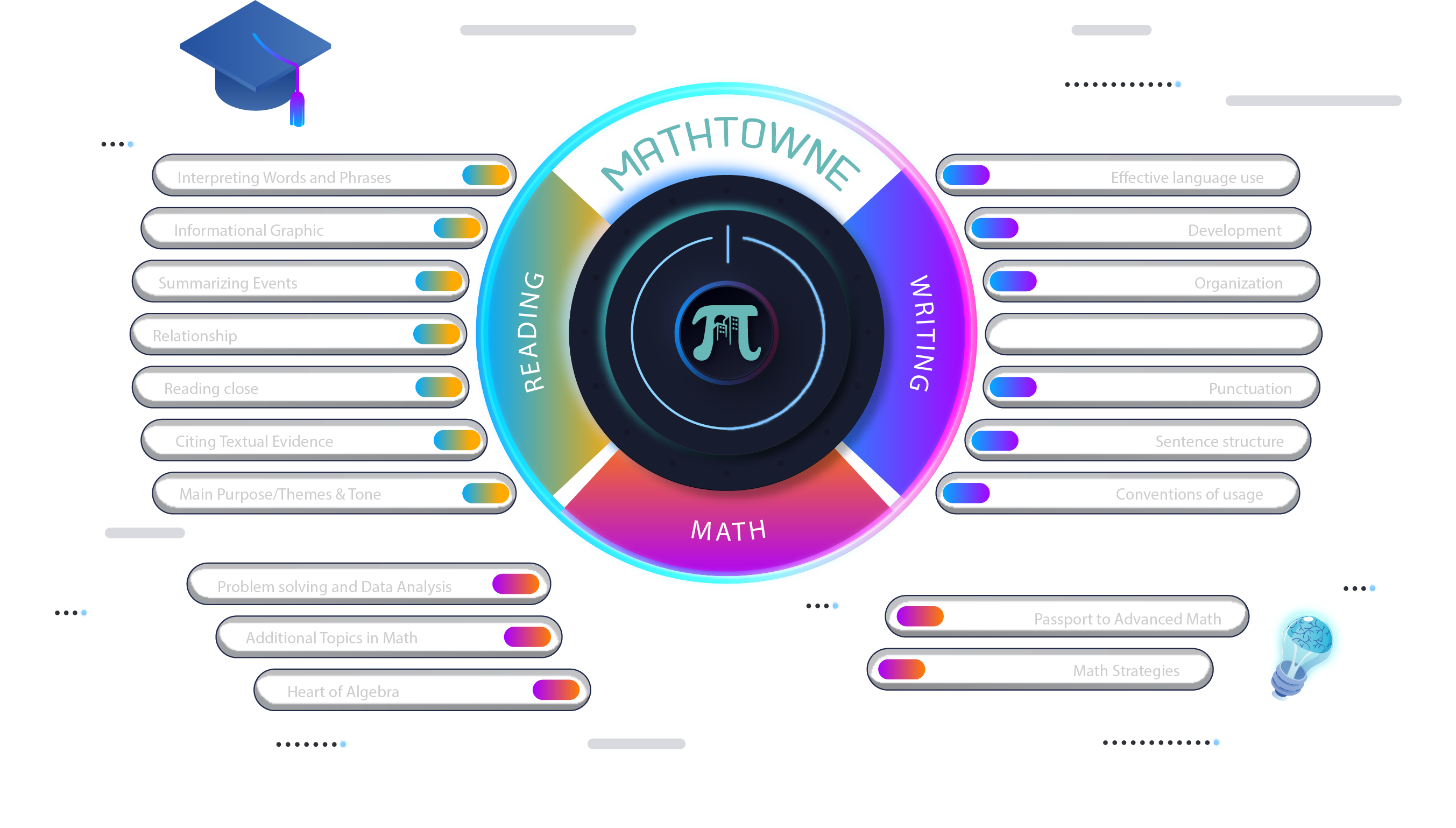
Expert Digital SAT tutors
Our SAT tutors provide one-on-one support for students preparing for the current Digital SAT. Sessions can focus on SAT Math, Reading and Writing, grammar, pacing, or test strategy based on what the student needs most.
Practice Test Review
Practice tests are used to find patterns. Tutors review missed questions with students, identify common mistakes, and turn the results into a focused study plan.
DIGITAL SAT FORMAT READINESS
Students learn how the Digital SAT works, including the two-section format, adaptive modules, built-in tools, timing, and question types. This helps reduce confusion before test day and makes practice more effective.
CLEAR PROGRESS UPDATES
Families receive clear feedback on what the student is working on, what is improving, and what should be reviewed next. The goal is to keep SAT prep organized, practical, and easier to manage.
One-on-One SAT Test Prep Tutoring

Private Digital SAT Tutors
MathTowne offers one-on-one Digital SAT prep for students in San Jose and nearby Bay Area communities. Our private SAT tutors help students prepare for the current digital format with focused support in SAT Math, Reading and Writing, timing, and test strategy.
Customized digital SAT program
Our Digital SAT prep program uses practice test results to identify each student’s strengths, weak areas, and pacing challenges. Tutoring sessions are built around the student’s goals, test date, and current skill level so prep feels more organized and easier to follow.
Working with Anh and Truccey to boost my SAT score was such an enjoyable experience for me. In a few short months, I went from scoring low 1200s to 1500s consistently. I cannot express the gratitude I have for both of them because in more ways than they know it, they have changed my entire life for the better.
– Hunter

Frequently Asked Questions
Should my student start with a diagnostic test?
Yes. A diagnostic test helps identify the student’s starting score range, weak areas, pacing issues, and whether they need more help with SAT Math, Reading and Writing, grammar, or test strategy.
What is the average SAT score?
The average SAT score is around 1050, but a student’s goal should depend on the colleges they are considering, their current starting point, and how much time they have to prepare. A diagnostic test is the best way to understand where a student currently stands and what to work on next. College Board says the SAT is scored from 400 to 1600.
What is considered a good SAT score?
A good SAT score depends on the student’s college goals. A score above the national average can be helpful, but more selective colleges may expect much higher scores. College Board says a score of 1350 or higher is in the top 10% of SAT test takers.
Do UC schools in California require SAT scores for admission?
The University of California does not consider SAT or ACT scores for admission decisions or scholarships. However, if a student submits scores, UC may use them for limited purposes such as meeting minimum eligibility requirements or course placement after enrollment.
Families applying to UC schools should focus mainly on grades, course rigor, activities, essays, and overall application strength, while still considering SAT prep if the student is also applying to private or out-of-state colleges that accept or require scores.
Should California students still take the SAT for UC, CSU, and private colleges?
CSU no longer uses SAT or ACT scores to determine admission eligibility, while private colleges in California vary by school, with some test-optional and others considering or requiring scores depending on policy.
What is SAT superscoring?
SAT superscoring means a college may combine a student’s best Reading and Writing score with their best Math score from different test dates. Not every college uses the same score policy, so families should check each college’s admissions website.
Should I take the SAT or ACT?
There are pros and cons to each test. Depending on your personal strengths and weaknesses, you should choose the test that works best for you. To see a more detailed breakdown of the tests, check out this article.
Digital SAT Practice Modules
Practice timed Reading & Writing and Math modules, then use the skill banks below to target the areas that need more work.
Module 1
32 minutes • 27 questions • Easy to medium
Start Module →Module 2
32 minutes • 27 questions • Medium to hard
Start Module →Module 1
35 minutes • 22 questions • Easy to medium
Start Module →Module 2
35 minutes • 22 questions • Medium to hard
Start Module →Practice by Skill
Use the skill banks to target weaker areas before or after a diagnostic.
Math Skill Bank
Build accuracy across core Digital SAT Math topics and calculator strategy.
Reading Skill Bank
Practice short passages, evidence, inference, vocabulary, and Craft & Structure.
Grammar Skill Bank
Target grammar rules, transitions, punctuation, sentence boundaries, and expression of ideas.